
Restore a True Reflective Finish
Our Services
Stone sealing
Stone Cleaning
Stone Grinding
Stone Polishing
Stone honing
Marble Etch Removal
Limestone Restoration
Tile and grout
Get in touch
8310 E Palm Ln Scottsdale, AZ 85257
(480) 233-4356
Mon – Sat 8.00 – 17.00
Sunday 9.00 – 17.00
Stone Polishing in Scottsdale AZ
Owner-operated by Diego Rivera. Licensed and insured. BBB Accredited Business with an A+ rating. Published Hone, Polish and Seal pricing starts at $1.75 per square foot.

Over time, stone surfaces lose their luster. Foot traffic, spills, and everyday wear can leave marble, travertine, and other natural stones looking dull or cloudy.
Luxury Stone Care AZ provides stone polishing in Scottsdale, AZ, one of our core stone refinishing services, for dull, etched, lightly scratched, and unevenly reflective marble, travertine, limestone, granite, onyx, and terrazzo. Owner Diego Rivera identifies the stone and damage, then selects the correction stages and final polishing method needed to restore a consistent high-gloss finish.
Call today at (480) 233-4356 or request a free in-home estimate.
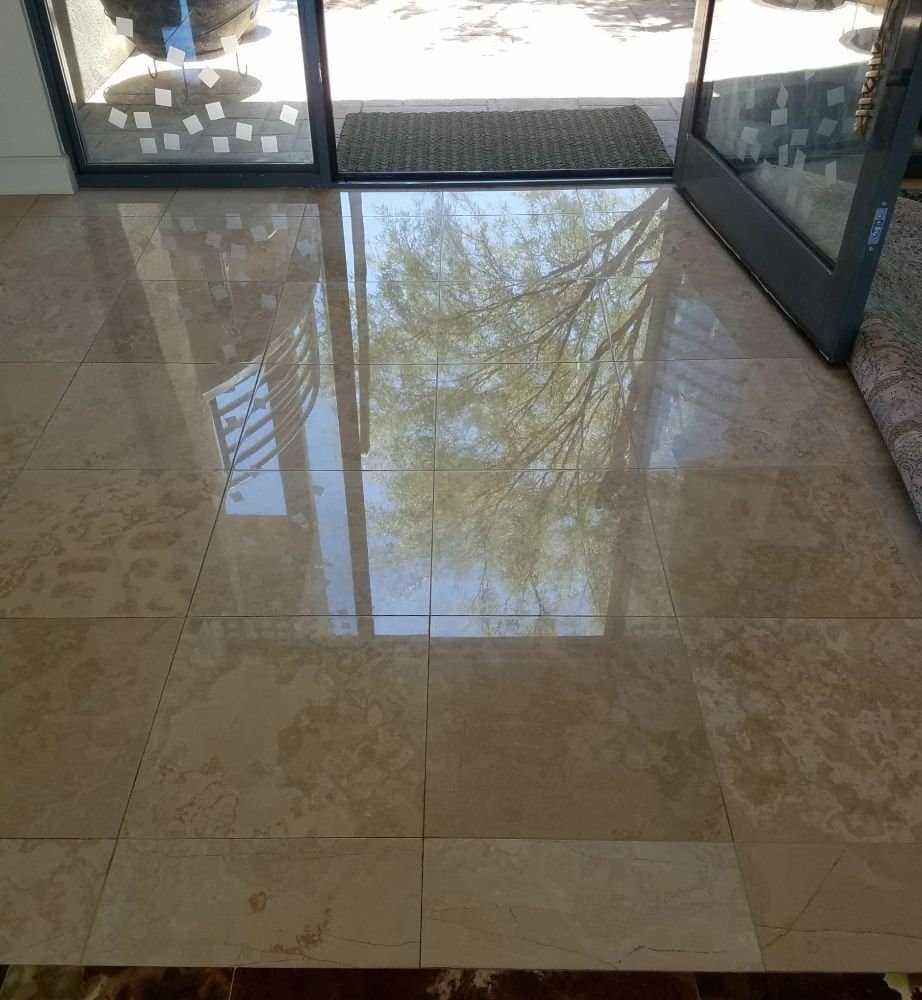
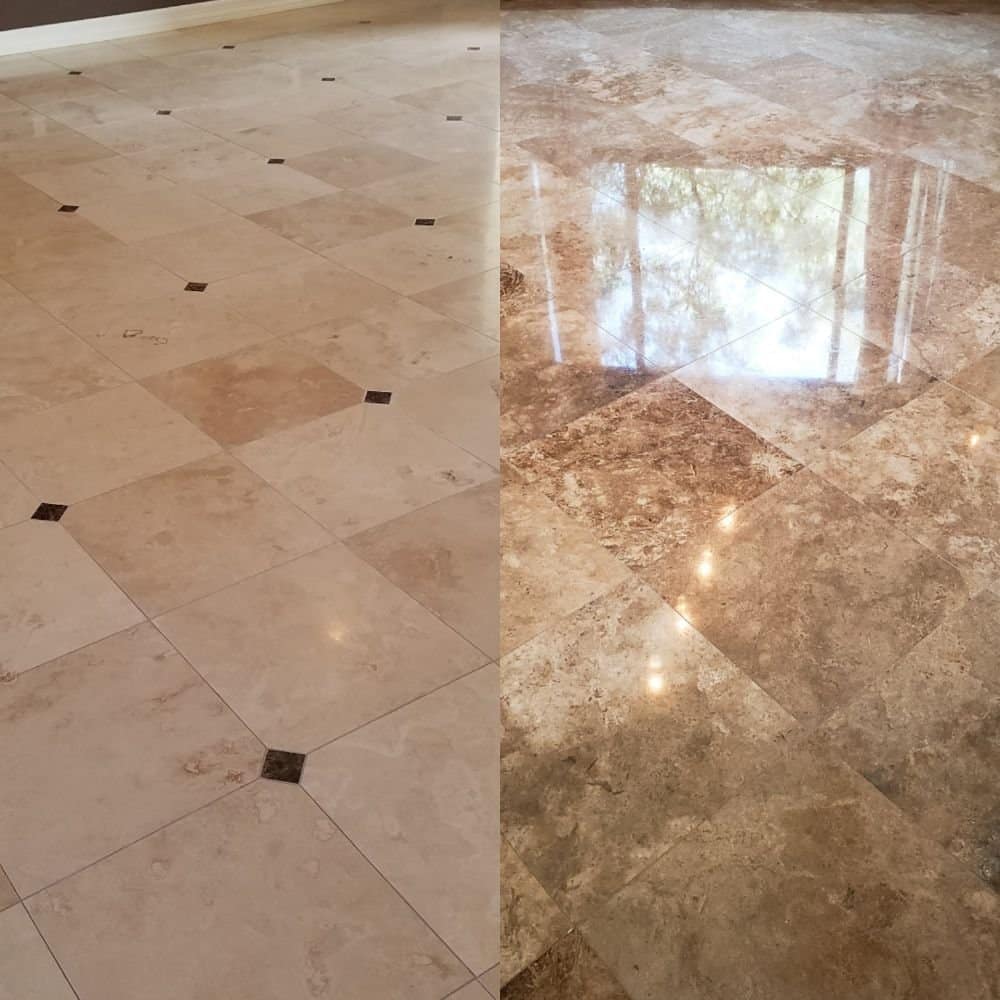
What does Stone Polishing restore?
Professional stone polishing restores gloss, color depth, clarity, and consistent light reflection on suitable natural stone. It corrects dull traffic lanes, light etch marks, fine scratches, and patchy shine after the surface receives the required correction stages. Polishing does not level lippage, strip old acrylic coatings, repair cracks, or stop future acid etching. Raised edges call for stone grinding, failed coatings call for stone cleaning and stripping, and a finished floor holds up longer with stone sealing.
Phoenix Valley dust acts like fine abrasive grit under shoes, furniture, carts, and floor equipment. Hard water leaves mineral deposits around showers, fountains, vanities, and wet areas. Wine, citrus, vinegar, and acidic bathroom cleaners etch marble, travertine, and limestone. Each condition looks dull, but each requires a different treatment.
The visible problem determines the process. A cloudy film from wax, acrylic, or topical sealer needs stripping. Hard water and cleaner residue need material-safe cleaning. Raised tile edges need grinding. A worn or etched reflective finish needs surface correction followed by polishing. Running a polishing compound over the wrong problem wastes labor and leaves swirls, smeared coating, or a bright halo around the original damage.
True stone polishing is not wax, acrylic, or a topical gloss coating. It refines the mineral surface with progressively finer abrasives and a polishing method selected for the material. The result comes from the stone itself, not from a temporary film that clouds, peels, or traps soil.
Not every stone or setting should receive the highest possible gloss. A reflective finish emphasizes color, veining, and architectural lighting, but it also reveals scratches, etch marks, lippage, streaks, and maintenance residue. For shower floors, pool-adjacent walking surfaces, and entries that get wet, Diego discusses finish choice and maintenance before work begins.
What Professional Stone Polishing Changes
- Diamond-Refined Gloss: Progressively finer abrasives remove the worn scratch pattern and rebuild a smooth, reflective surface instead of covering dull stone with wax or acrylic.
- Etch and Fine Scratch Correction: Surface correction reaches light acid etching, fine scratches, and traffic wear before the final polishing stage restores consistent light reflection.
- Material-Specific Polishing Chemistry: Marble, travertine, limestone, granite, onyx, and terrazzo receive different abrasives, compounds, pressure, water control, and finishing methods.
- Edge-to-Field Finish Matching: Perimeters, doorways, cabinet lines, corners, counters, vanities, and open floor areas are detailed to reduce obvious gloss changes and machine-stop marks.
What Stone Polishing Will Not Fix
Polishing does not remove loose tile, active cracks, hollow bonding, substrate movement, lippage, deep gouges, missing travertine fill, old coatings, or stains that have entered the pores. Those conditions require repair, grinding, stripping, stain treatment, or another approved step before a uniform reflective finish is possible.
Why Poor Polishing Costs More
Polishing permanently changes the surface. Starting too aggressively removes unnecessary stone. Starting too fine leaves damage underneath the shine. The wrong compound leaves haze, dark areas, swirls, edge burn, or a different gloss around a spot repair. Diego tests the stone and starts at the least aggressive stage that reaches the actual damage.
How Our Stone Polishing Process Works
Our stone polishing process covers material identification, finish assessment, surface preparation, staged diamond refinement, material-specific polishing, edge detailing, and dry-light inspection. Diego Rivera leads the work because the first abrasive stage must reach the damage without removing more stone than necessary, and the final method changes between marble, travertine, limestone, granite, onyx, and terrazzo.

1. Stone Identification and Free Estimate
We identify the stone, engineered surface, terrazzo system, grout, repairs, and any topical coating before choosing the process. Diego inspects traffic lanes, scratches, acid etching, stains, hard water deposits, lippage, cracks, fill, edge condition, previous treatments, and the way natural and artificial light reflect across the surface.

2. Area Protection, and Surface Preparation
We protect adjacent flooring, cabinets, walls, baseboards, appliances, fixtures, doors, and transitions. Loose grit and removable residue come off before abrasive work begins. A controlled test area confirms the starting abrasive, achievable gloss, response of the stone, edge detail, and whether old wax, acrylic, topical sealer, repairs, or deeper damage require a separate scope.

3. Staged Diamond Refinement and Polishing
The crew works through the abrasive stages required to remove the worn finish, light etching, and fine scratches without cutting deeper than the condition demands. Each stage removes the scratch pattern from the previous stage. Skipping a step leaves visible lines or uneven reflection when the final gloss develops.

4. Dry Inspection, Protection, and Care Guidance
The surface is cleaned and allowed to dry enough for a fair inspection. Moisture temporarily deepens color and hides haze or inconsistent reflection, so Diego reviews the finish dry under the property’s normal lighting. He checks traffic lanes, edges, corners, transitions, repairs, grout, and the reflection from more than one viewing angle.
Sealer is applied only when the material and approved scope require it. Sealer does not create gloss, stop scratches, or prevent acid etching. It improves stain resistance by slowing absorption. Before leaving, we explain when foot traffic, furniture, water, cleaning, and normal use may return, plus which cleaners protect the polished finish.
Serving Scottsdale & the East & West Valley
Luxury Stone Care AZ provides residential and commercial stone polishing from Scottsdale throughout the East and West Valley. We restore reflective stone in homes, offices, showrooms, hotels, retail spaces, and other facilities, with the scope adjusted for traffic patterns, furniture, access, lighting, maintenance schedules, and the finish expected when the project is complete.
Arizona dust dulls polished floors when grit remains under shoes, rugs, carts, and cleaning equipment. Hard water and acidic products damage calcium-based stone in bathrooms, showers, kitchens, and hospitality spaces. Strong daylight across large rooms also exposes patchy gloss, swirls, edge differences, and traffic lanes that are less obvious under low light.
We serve Scottsdale, Paradise Valley, Fountain Hills, Phoenix, Tempe, Mesa, Chandler, Gilbert, Peoria, and other listed Phoenix Valley communities.
Stone Surfaces We Polish
We polish suitable marble, travertine, limestone, granite, onyx, and terrazzo after identifying the material, construction, finish, and damage. Each surface responds differently to abrasives, pressure, water, polishing compounds, edge tools, and heat. Slate, flagstone, saltillo, pavers, ceramic, porcelain, and engineered quartz are not treated as routine polishing candidates.
Marble Floors, Countertops, and Vanities
Marble responds well to staged surface correction and polishing when the stone and installation are sound. A reflective finish highlights color and veining, but it also makes acid etching and scratches easier to see. Wine, citrus, vinegar, and acidic bathroom cleaners damage the calcium-based surface rather than leaving ordinary dirt.
Light etching and fine scratches are corrected within the polishing scope when the approved starting stage reaches them. Deep scratches, severe wear, lippage, cracks, and unstable repairs require a broader correction plan.
Travertine Floors, Showers, and Walls
Suitable filled travertine develops a high-gloss finish after the pits, scratches, etching, and traffic wear receive the correct refinement. Abrasive work exposes natural voids or weak fill when they sit below the surface, so Diego inspects holes, old filler, grout, repairs, and pitting before setting the scope.
Limestone Floors and Counters
Limestone varies widely in density, fossil content, softness, and achievable reflection. Some limestone develops a strong polish, while other varieties reach a softer reflective finish. A test area establishes the correct abrasive sequence and realistic gloss before the full surface is processed.
Granite Floors and Countertops
Granite is harder than marble, travertine, and most limestone. It requires different abrasives, compounds, pressure, and edge work. A marble polishing powder is not a substitute for a granite restoration system. Diego evaluates factory finishes, resins, seams, chips, edge profiles, and the depth of the damage before accepting the scope.
Onyx Surfaces
Onyx receives a case-by-case assessment because veins, resin, translucence, repairs, and brittle areas affect pressure, heat, and edge work. The test area determines whether the requested gloss is achievable without making existing fractures or fill more visible.
Cement-Based and Resin-Based Terrazzo
Terrazzo polishing depends on the binder, aggregate, previous coating, repairs, thickness, and desired level of reflection. Cement-based terrazzo and resin-based terrazzo do not receive one identical sequence. The process must keep aggregate exposure, repair areas, edges, and the open field visually consistent.
Surfaces That Need a Different Treatment
Natural-cleft slate, flagstone, cantera, saltillo, pavers, glazed ceramic, porcelain, and engineered quartz do not receive the same polishing process as dimensioned marble, travertine, limestone, granite, onyx, or terrazzo. Grinding or polishing erases texture, removes glaze, exposes a different body color, or creates an obvious patch on these surfaces.
Slate labeled as “matte or semi-gloss” belongs under a honing, cleaning, enhancing, or sealing discussion, not the primary high-gloss polishing lane. Engineered quartz has a factory resin finish and receives a separate assessment rather than a natural-stone polishing promise.
Stone Polishing Questions Property Owners Ask
Stone polishing decisions come down to the stone, damage depth, current coating, desired gloss, and how the area is used. The answers below explain cost, timing, etch and scratch correction, polishing versus honing, sealing, and when restoration makes more sense than replacement. The on-site test area confirms the final scope.