Restore the Stone, Not Just the Shine
Our Services
Stone sealing
Stone Cleaning
Stone Grinding
Stone Polishing
Stone honing
Marble Etch Removal
Limestone Restoration
Tile and grout
Get in touch
8310 E Palm Ln Scottsdale, AZ 85257
(480) 233-4356
Mon – Sat 8.00 – 17.00
Sunday 9.00 – 17.00
Limestone Restoration in Arizona
Owner Diego Rivera identifies the limestone, finish, absorption, damage, and previous products before selecting cleaning, stripping, grinding, honing, polishing, and sealing for floors, showers, countertops, patios, fireplaces, and commercial spaces.
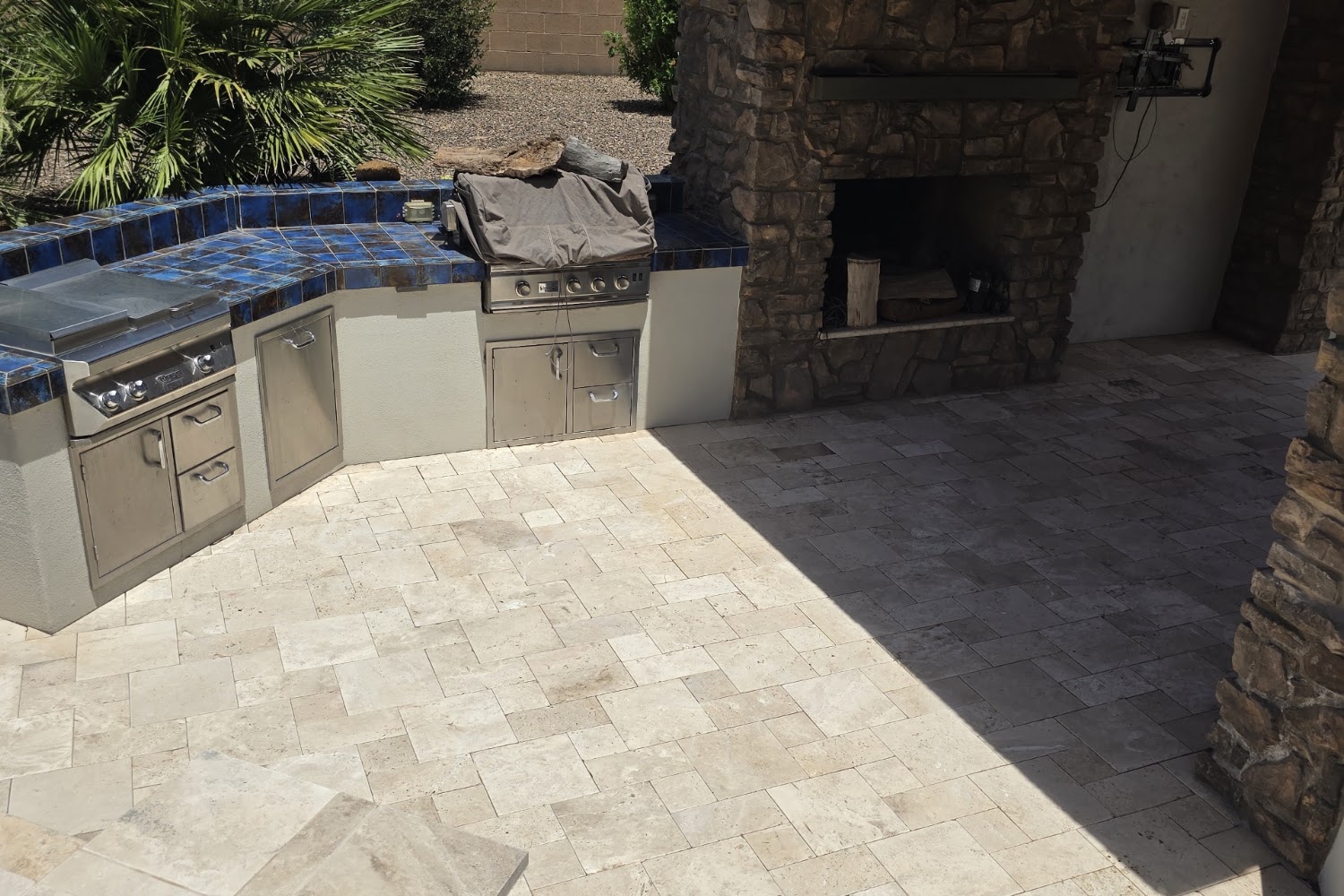
Stone may look strong, but it’s naturally porous. Without proper sealing, your floors, countertops, and showers can absorb stains, water, and dirt; leaving them dull, discolored, or even permanently damaged.
Luxury Stone Care AZ seals and reseals porous stone for homes and businesses in Scottsdale and across the Phoenix Valley. Owner Diego Rivera leads each project, matching the sealer and application method to travertine, marble, limestone, flagstone, slate, pavers, grout, and the surface’s traffic, moisture, and outdoor exposure.
Call today at (480) 233-4356 or request a free in-home estimate.
Why Is Limestone Restoration Important?
Limestone restoration corrects surface damage and buildup that ordinary cleaning cannot solve. It removes compatible coatings and mineral residue, levels suitable raised edges, reduces scratches and acid etching, restores a chosen honed or polished finish, and improves stain resistance with sealer when appropriate. Structural movement, active moisture, and failing installations require separate repair.
Limestone is a calcium-carbonate stone. It reacts to vinegar, citrus, wine, acidic bathroom cleaners, rust removers, and other low-pH products. An acid mark usually appears as a pale spot, dull ring, rough patch, or loss of reflection. That mark is etching, not dirt, so repeated cleaning does not remove it.
Limestone is also softer than granite, and its absorption varies widely from one variety to another. Some limestone is dense and finishes evenly. Other limestone contains fossils, open pores, soft mineral zones, fill, veins, or a high absorption rate. Dolomitic limestone is often denser and more abrasion-resistant than calcium-carbonate limestone, but it still requires identification and testing before restoration. Travertine is a related calcium-based stone, but its natural holes and fill call for a different approach, covered under travertine restoration.
Arizona dust works like fine abrasive grit under shoes, rugs, furniture, carts, and floor equipment. Hard water leaves mineral deposits in showers, bathrooms, fountains, and pool-adjacent areas. Intense sun, irrigation overspray, pool chemicals, and repeated wet-and-dry cycles affect exterior limestone, joints, repairs, and topical coatings.
What Professional Limestone Restoration Changes
- Calcium-Stone Etch Correction: Staged honing or polishing corrects surface damage from vinegar, citrus, wine, and acidic cleaners after the depth and surrounding finish are confirmed.
-
Scratch and Traffic-Wear Refinement: The abrasive sequence reduces fine and moderate scratches, worn traffic lanes, and patchy sheen without removing more limestone than the damage requires.
-
Coating and Mineral Diagnosis: Testing separates wax, acrylic, topical sealer, cleaner film, soap residue, and hard-water deposits from etching or worn mineral finish.
-
Finish-Specific Restoration: Honed, satin, and reflective finishes receive different abrasive endpoints, edge work, maintenance plans, and expectations for future wear.
What Limestone Restoration Does Not Fix
Surface restoration does not secure loose tile, stop active substrate movement, rebuild failed shower waterproofing, repair plumbing leaks, stabilize structural cracks, or reverse severe material deterioration. Limestone that is delaminating, crumbling through its depth, or installed in an unsuitable environment may require repair or replacement rather than additional abrasion.
How Our Limestone restoration Process Works
Our limestone restoration process covers material identification, test-area diagnosis, protection, cleaning or coating removal, repair planning, staged abrasive correction, finish selection, sealing when appropriate, and dry final inspection. Diego Rivera leads the assessment because soft limestone, dense dolomitic limestone, fossil-bearing stone, honed surfaces, polished surfaces, and exterior limestone do not respond the same way.

1. Limestone Identification and On-Site Assessment
We confirm that the surface is limestone rather than marble, travertine, ceramic tile, porcelain tile, engineered quartz, or another material. Diego inspects color, texture, pores, fossils, fill, veins, joints, previous coatings, absorption, and the current honed, polished, brushed, tumbled, or textured finish.

2. Test Area and Written Restoration Plan
A controlled test area establishes what is removable and how the limestone responds. Diego checks whether haze comes from residue or coating, whether a dark spot is a stain or moisture condition, how deeply scratches penetrate, and which abrasive stage reaches the damage without cutting too far.

3. Cleaning, Coating Removal, and Surface Correction
Loose grit and removable contamination come off before abrasive work. Compatible wax, acrylic, and topical sealer are stripped when they block access to the limestone. Hard-water residue, soap film, construction haze, and embedded soil receive material-specific cleaning rather than an acid wash.

4. Dry Inspection, Sealing, and Maintenance Guidance
The restored limestone is cleaned and allowed to dry enough for a fair inspection. Wet limestone temporarily darkens and can hide haze, scratches, blotchy sealer, and uneven reflection, so Diego reviews the open field, edges, corners, joints, repairs, and transitions under the property’s normal lighting.
Where Do We Provide Limestone Restoration?
Luxury Stone Care AZ provides limestone restoration from Scottsdale throughout the East and West Valley, including Phoenix, Tempe, Chandler, Gilbert, Mesa, Paradise Valley, Fountain Hills, Ahwatukee, Peoria, Carefree, Cave Creek, Anthem, San Tan Valley, Casa Grande, Buckeye, and nearby communities. Residential and commercial projects receive the same material-specific assessment and owner-led scope.
Arizona conditions matter throughout the service area. Desert dust scratches floors, hard water marks showers and fountains, sunlight and heat affect exterior stone and coatings, and pool or irrigation exposure changes the cleaning and sealing plan. The material, application, and damage control the process, not the city name alone.
Which Limestone Surfaces Do We restore?
Limestone restoration applies to sound floors, foyers, hallways, kitchens, bathrooms, showers, walls, countertops, vanities, fireplaces, patios, pool-adjacent areas, fountains, and commercial spaces. The treatment changes by finish, exposure, absorption, joint condition, and installation stability. Exterior or wet-area deterioration receives a moisture and material assessment before refinishing begins.
Limestone Floors, Foyers, and Hallways
Interior floors show abrasive dust, traffic lanes, scratches, etching, lippage, cleaner film, and uneven reflection. The restoration plan covers open areas, perimeter edges, doorways, stairs, grout joints, baseboards, cabinets, floor transitions, rugs, furniture, and the final matte, satin, or polished finish.
Large continuous floors usually look better when the correction field follows the visible wear rather than stopping around one isolated mark. Spot work can leave a halo or finish mismatch when the surrounding limestone has aged or worn differently.
Limestone Countertops, Vanities, and Tabletops
Countertops and vanities face citrus, wine, cosmetics, soap, toothpaste, cooking oil, hard water, hot items, and repeated wiping. Acid etching appears as dull rings or pale areas, while oil and cosmetics often create darker stains.
Diego checks seams, edges, backsplashes, sink cutouts, repairs, resin, caulk, fixtures, and adjacent tile before restoring the finish. Limestone countertops remain acid-sensitive after restoration and sealing, so coasters, trays, quick spill response, and a neutral cleaner matter.
Limestone Showers and Bathroom Walls
Showers combine limestone, grout, caulk, metal, glass, soap residue, hard-water deposits, repeated moisture, and cleaning products. Material-safe cleaning removes compatible buildup. Honing corrects etched or worn limestone. Sealer slows absorption after the stone is clean and dry enough.
Restoration does not fix a plumbing leak, failed waterproofing, active moisture behind the stone, missing movement joints, or failed caulk. Recurring dark areas, efflorescence, loose tile, or rapid discoloration require the moisture source to be investigated.
Limestone Patios, Pool Areas, Fountains, and Exterior Features
Exterior limestone faces Arizona sun, extreme surface heat, dust, irrigation overspray, pool chemicals, soil, algae, hard water, and repeated wet-and-dry cycling. The treatment depends on the limestone variety, texture, drainage, joints, previous coating, and whether the surface is structurally sound.
Some limestone performs well outdoors, while other varieties are too soft, absorbent, or deterioration-prone for a specific paving or water-feature application. When the material is breaking down through its depth, repeated coating or abrasive refinishing is not a durable substitute for correcting the exposure or replacing unsuitable stone.
Limestone Fireplaces and Architectural Features
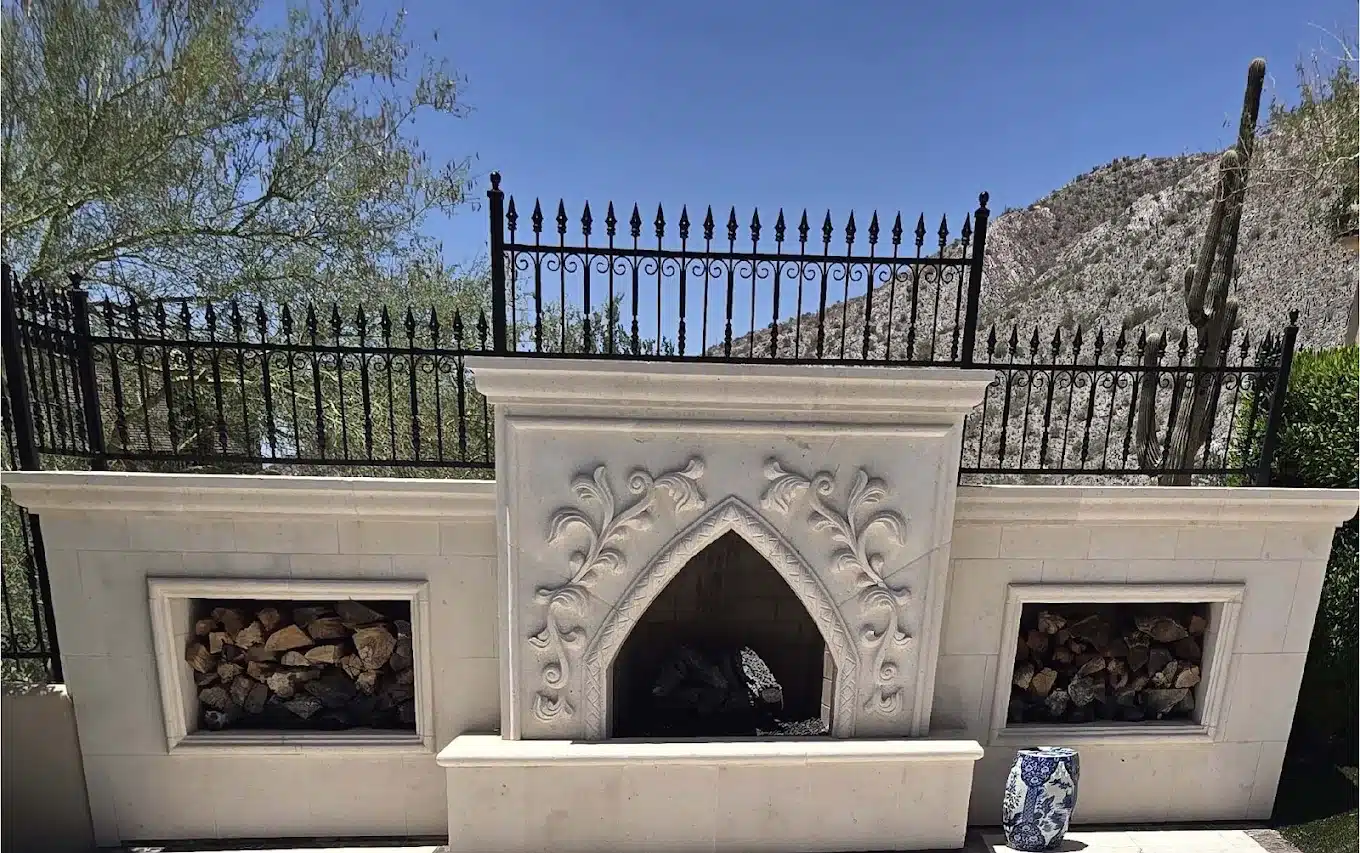
Fireplace surrounds, mantels, columns, wall panels, and carved limestone collect dust, soot, oils, hand contact, and construction residue. Textured or carved areas require controlled cleaning and hand detailing. Abrasive floor methods are not transferred automatically to moldings, relief work, or vertical stone.
Commercial Limestone Floors and Walls
Hotels, offices, showrooms, restaurants, retail spaces, lobbies, corridors, and managed properties need a scope that addresses traffic, carts, floor equipment, appearance standards, access, furniture, elevators, service corridors, safety boundaries, drying, and reopening time.
Scheduled maintenance reduces the amount of stone removed over the life of the floor. Dust control, entry mats, neutral cleaning, quick spill response, and periodic finish correction protect high-traffic limestone between larger restoration projects.
What Do Property Owners Ask About Limestone Restoration?
Property owners usually ask whether dull spots are stains or etching, whether scratches and hard-water marks will come out, which finish fits the space, what sealer changes, and when replacement makes more sense. The answer depends on the limestone, damage depth, installation, moisture, previous products, application, and desired finish.
What does limestone restoration include?
Limestone restoration combines the steps needed to correct the actual condition. A project may require material-safe cleaning, coating removal, stain treatment, grinding, honing, polishing, repair planning, and sealing. The on-site test area establishes the sequence rather than applying every treatment to every surface.
Can acid etching and scratches be removed from limestone?
Yes, when the damage is within the restorable surface and the limestone is stable. Honing removes acid etching and light to moderate scratches, while polishing restores reflection on stone capable of holding that finish. Deep scratches or lippage require lower abrasive stages or grinding, which permanently removes more material.
Can you remove stains, hard-water spots, and cloudy sealer?
Hard-water deposits, cleaner film, wax, acrylic, and compatible topical sealer are removable when testing confirms the condition and a stone-safe process. Stains inside the pores require treatment matched to oil, organic material, metal, or another source. Some deep stains remain permanent, and acid etching does not wash away like residue.
What causes limestone to flake, powder, or spall?
Spalling and powdering often point to moisture movement, soluble salts, incompatible coatings, repeated wet-and-dry exposure, pool or fountain chemicals, installation problems, or an unsuitable limestone variety. Surface cleaning alone does not correct the cause. Active moisture, loose material, and deep deterioration must be addressed before refinishing is approved.
Does restored limestone need to be sealed?
Porous limestone often benefits from a penetrating sealer after restoration, but the stone should be tested rather than sealed by habit. Sealer slows absorption and improves stain resistance. It does not create gloss, prevent scratches, stop acid etching, fix moisture problems, or make limestone maintenance-free.