Correct Acid Damage at the Surface
Our Services
Stone sealing
Stone Cleaning
Stone Grinding
Stone Polishing
Stone honing
Marble Etch Removal
Limestone Restoration
Tile and grout
Get in touch
8310 E Palm Ln Scottsdale, AZ 85257
(480) 233-4356
Mon – Sat 8.00 – 17.00
Sunday 9.00 – 17.00
Marble Etch Removal in Arizona
Owner Diego Rivera identifies whether a dull spot is acid etching, staining, hard-water residue, scratching, or coating haze, then restores polished or honed marble with controlled abrasive refinement.
What Is a Marble Etch Mark?
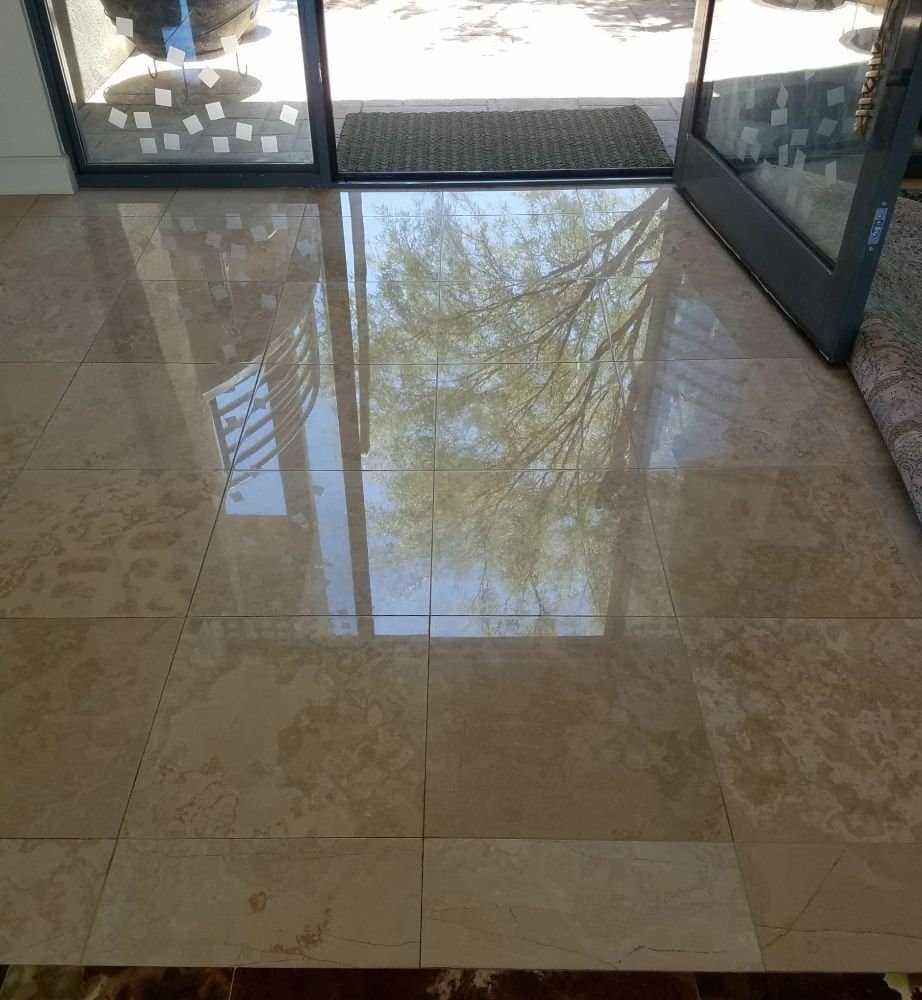
A marble etch mark is chemical surface damage caused when acid reacts with the calcium-based stone. The damaged area loses smoothness or reflection and appears as a dull ring, pale spot, cloudy patch, or rough mark. Cleaning does not remove etching because the acid changed the marble finish rather than leaving removable dirt.
Common sources include:
- Lemon, lime, orange, and other citrus juice
- Wine, cocktails, soda, and sports drinks
- Vinegar and vinegar-based cleaners
- Tomato sauce and acidic food spills
- Acidic bathroom, toilet, and limescale cleaners
- Rust removers and grout-haze removers
- Some cosmetic, skincare, and personal-care products
- Acidic disinfectants or descaling products
- Residue transferred from cleaning tools used on another surface
Call today at (480) 233-4356 or request a free on-site estimate.
Why Is Marble Etch Removal Important?
An etch mark and a stain are not the same problem. Etching changes the texture and sheen at the surface. A stain changes the color because oil, pigment, metal, organic material, or another substance entered the pores. One spill can create both conditions, so the color must be treated separately before the final finish is matched.
Hard-water spots are also different. Mineral residue sits on the marble and often feels crusty or chalky. Acid damage sits within the finish and becomes most visible under angled or reflected light. Using an acidic scale remover on marble often removes mineral buildup while creating a larger etch mark underneath it.
Scratches are physical cuts or abrasion lines. Coating haze comes from cleaner film, wax, acrylic, or failed topical sealer. Diego identifies which condition is present before selecting cleaning or stripping, honing, or polishing. Treating every dull spot as dirt wastes money and often makes the finish harder to match.
What Marble Etch Removal Corrects
- Etch-versus-Stain Diagnosis: Separates acid damage from stains, hard-water deposits, scratches, and coating haze before correction begins.
-
Restore the Existing Finish: Refines the damaged marble to match the surrounding polished, honed, matte, or satin surface rather than leaving a bright spot or dull halo.
-
Correct the Right Size Area: Determines whether one isolated mark can be blended locally or whether a larger countertop, vanity, floor section, or room needs uniform refinishing.
-
Protect the Finish Afterward: Explains stone-safe cleaning, spill response, tray and coaster placement, and why penetrating sealer improves stain resistance but does not prevent etching.
What Marble Etch Removal Does Not Fix
Etch removal will not pull out a deep stain, repair a chip or crack, level raised tile, remove a failed coating, or fix moisture behind a shower wall. Those conditions require separate treatment before the marble finish can be restored evenly.
How Our Marble Etch Removal Process Works
Every etch repair follows four stages, from confirming the stone to a dry final check. Diego Rivera chooses the least aggressive correction that reaches the etch because a shallow dull mark, deep rough spot, honed finish, and polished finish require different abrasive endpoints.

1. Confirm the Material and Existing Finish
We first confirm the surface is natural marble and not quartz, porcelain, cultured marble, or another marble-look product. These materials do not react or refinish the same way, and a product intended for natural marble can damage resin, glaze, or a factory finish.

2. Separate Etching From Staining and Residue
A controlled test area determines whether the mark is chemical damage, absorbed staining, mineral buildup, cleaner residue, or more than one condition. Removable residue comes off before abrasive correction. A stain receives its own treatment decision because polishing over absorbed color does not remove the source.

3. Hone or Polish the Etched Area
The correction follows the existing finish and depth of damage. Each abrasive stage must remove the pattern left by the prior stage. The crew controls pressure, water, and edge detail so the repair blends with the surrounding marble rather than drawing attention to itself.

4. Inspect the Marble Dry Under Normal Lighting
Wet marble looks darker and more reflective, which hides haze, swirls, uneven gloss, and incomplete scratch removal. Diego reviews the corrected surface after it has dried enough for a fair comparison under the property’s normal natural and artificial lighting.
Where Do We Provide Marble Etch Removal?
Luxury Stone Care AZ provides marble etch removal from its Scottsdale home base throughout the East and West Valley. We serve Scottsdale, Phoenix, Tempe, Chandler, Gilbert, Mesa, Paradise Valley, Fountain Hills, Ahwatukee, Carefree, Cave Creek, Anthem, Peoria, San Tan Valley, Casa Grande, Buckeye, Glendale, and nearby communities.
Residential projects range from one etched vanity or dining table to kitchens, bathrooms, showers, foyers, and whole-home marble floors. Commercial projects include hotels, restaurants, offices, and retail spaces.
Arizona conditions influence the broader finish. Desert dust creates fine abrasion, hard water leaves mineral residue, and intense natural light reveals halos, swirl marks, and uneven reflection. Diego evaluates the etch mark and the surrounding wear so the corrected area fits the actual surface rather than looking newly polished in isolation.
Which Marble Surfaces Do We Restore?
We remove etch marks from sound natural marble countertops, vanities, floors, showers, tabletops, and commercial surfaces. The method changes with the surface, since edges, seams, fixtures, and the surrounding finish decide how the work is done.
Marble Countertops and Kitchen Islands
Kitchen marble takes lemon juice, wine, vinegar, tomato sauce, and acidic cleaners. Etches cluster around sinks, coffee stations, and prep areas. Oil or food pigment can create a stain inside the same mark.
Diego checks the entire working plane before recommending a spot repair. One isolated mark on a recently finished counter often blends locally. Multiple rings, broad dullness, or years of micro-scratching usually look better after the full countertop or island receives a uniform honed or polished finish.
Sink cutouts, seams, edges, and nearby surfaces are protected during the work. A repair that stops short of an edge or seam can create an obvious gloss change under kitchen lighting.
Marble Bathroom Vanities
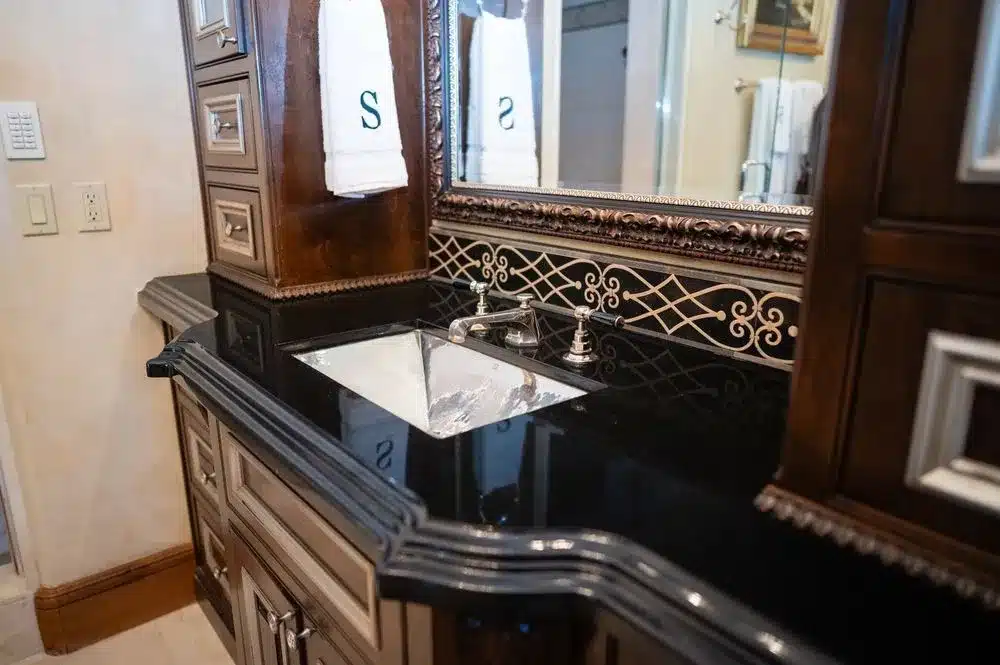
Vanities take cosmetics, skincare acids, toothpaste, hard water, and bathroom cleaners. Etches usually show up around faucets, soap dispensers, and sink edges. Rust-colored, oily, or dark marks point to staining in addition to finish damage.
A vanity is a small surface with a high percentage of edges and fixtures, so setup and hand detail drive the work more than square footage alone. The estimate accounts for backsplashes, sinks, seams, and the finish on adjoining pieces.
Marble Floors, Foyers, and Hallways
Floors develop etching from spills, pet accidents, cleaning products, tracked chemicals, and maintenance equipment. Arizona dust adds fine scratches and worn traffic lanes that become more obvious after one etch mark is corrected.
A spot repair works only when the surrounding floor has a consistent finish. Widespread wear, overlapping etches, lippage, old coatings, and edge differences require a larger honing or polishing field. Grinding is reserved for stable marble with raised tile edges or deeper damage that ordinary honing cannot reach.
Marble Showers and Bathroom Walls
Shower marble takes soap film, hard-water minerals, acidic scale removers, and constant moisture. Stone-safe cleaning removes the buildup. Honing or polishing corrects the etched mineral surface after the deposits are removed.
Restoration does not repair failed waterproofing, plumbing leaks, missing caulk, active movement, or moisture behind the marble. Recurring dark areas, efflorescence, loose tile, and persistent joint failure require the moisture or installation problem to be addressed.
Marble Tables, Desks, Bars, and Furniture Tops
Tabletops and bars show wine rings, citrus marks, and cup outlines, especially under direct lighting. Thin tops, past repairs, inlays, antique patina, and delicate edges get a case-by-case look before any abrasive work.
Commercial Marble Surfaces
Hotels, restaurants, offices, and retail spaces need etch correction planned around traffic, work hours, and how soon the area can reopen. Repeated spot damage often supports a scheduled maintenance plan rather than emergency correction after every mark.
What Do Property Owners Ask About Marble Etch Removal?
Property owners usually ask whether a dull spot is an etch or stain, whether sealer should have stopped it, whether a do-it-yourself powder is safe, and when a full surface needs refinishing. The answer depends on the finish, how deep the damage goes, and whether the spill also stained the marble.
What is the difference between a marble etch mark and a stain?
An etch mark is surface damage caused by an acidic reaction, so it looks dull, pale, cloudy, or rough under angled light. A stain is absorbed color from oil, food, metal, cosmetics, or another substance. One spill can cause both, and the stain must be addressed separately before the final finish is matched.
Can deep marble etching be removed completely?
Deep etching is removed when enough sound marble remains and the surface supports the required honing stages. The correction removes a controlled layer, then rebuilds the original honed or polished finish. Permanent discoloration, deep staining, unstable repairs, thin stone, or structural damage can limit the final result.
Does marble sealer prevent etch marks?
No. Penetrating sealer slows absorption and improves stain resistance, but it does not stop acid from reacting with calcium-based marble. Lemon, vinegar, wine, acidic cleaners, and descalers still etch sealed marble, so spill response and stone-safe cleaning remain necessary.
Are marble etch-removal kits safe to use?
A product formulated for the exact marble and finish can correct a shallow mark, but finish matching is the risk. The wrong powder, pad, pressure, working area, or contact time leaves bright rings, swirls, roughness, or a larger dull patch. Honed marble, dark marble, veined stone, resin-filled slabs, and deep etches deserve professional testing.
Is spot repair enough, or does the whole countertop or floor need refinishing?
Spot repair fits an isolated mark when the surrounding finish is even and the blend area can disappear under normal lighting. Multiple etches, broad dullness, years of micro-scratching, or a highly reflective surface usually look better after a full countertop plane, room, or connected floor field is refinished. Diego confirms the least invasive scope that will finish consistently.