
Stone and Tile Care for Mesa Properties
Areas We Serve
Phoenix
Mesa
Gilbert
Chandler
Tempe
Get in touch
8310 E Palm Ln Scottsdale, AZ 85257
(480) 233-4356
Mon – Sat 8.00 – 17.00
Sunday 9.00 – 17.00
Stone and Tile Care in Mesa, AZ
Cleaning, sealing, honing, polishing, and grout care for Mesa homes and businesses. Owner-operated by Diego Rivera. Licensed and insured.
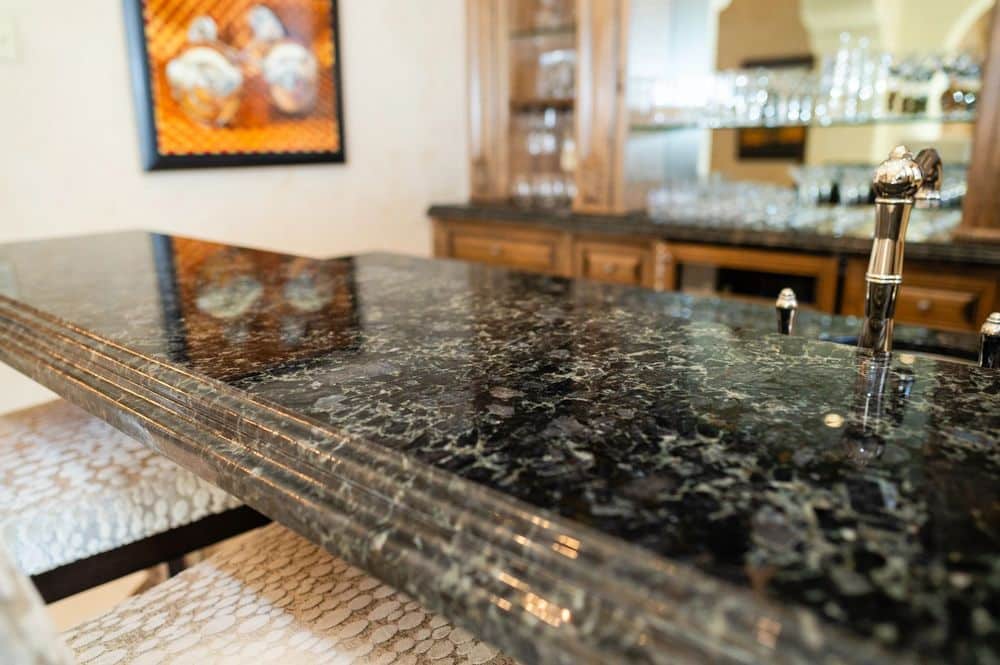
Mesa runs the full spread of East Valley housing: newer builds in Eastmark, established neighborhoods like Dobson Ranch and Alta Mesa, and custom homes up in Las Sendas and Red Mountain Ranch with big travertine floors and granite kitchens. The stone changes by decade, and so does the right treatment.
Luxury Stone Care AZ provides stone and tile care in Mesa, AZ for dull, etched, scratched, stained, uneven, and coated surfaces. Owner Diego Rivera leads cleaning, stripping, grinding, honing, polishing, sealing, and tile and grout projects for homes, HOAs, managed properties, and commercial spaces across Mesa.
Call today at (480) 233-4356 or request a free in-home estimate.
What Stone and Tile Problems Do Mesa Properties Face?
Mesa surfaces face hard water, abrasive desert dust, strong UV exposure, and heavy indoor-outdoor traffic. The City of Mesa reports water hardness from 12 to 22 grains per gallon, depending on the water source. Those conditions create mineral film, gritty wear, coating failure, weathered exterior surfaces, and darkened grout, but each condition needs a different treatment.
White deposits in a shower, fountain, or patio can be hard-water residue, efflorescence, grout haze, cleaner film, or sealer residue. Those conditions can look alike after they dry. Diego identifies the material and deposit before choosing chemistry because an acidic scale remover can permanently etch marble, travertine, and limestone.
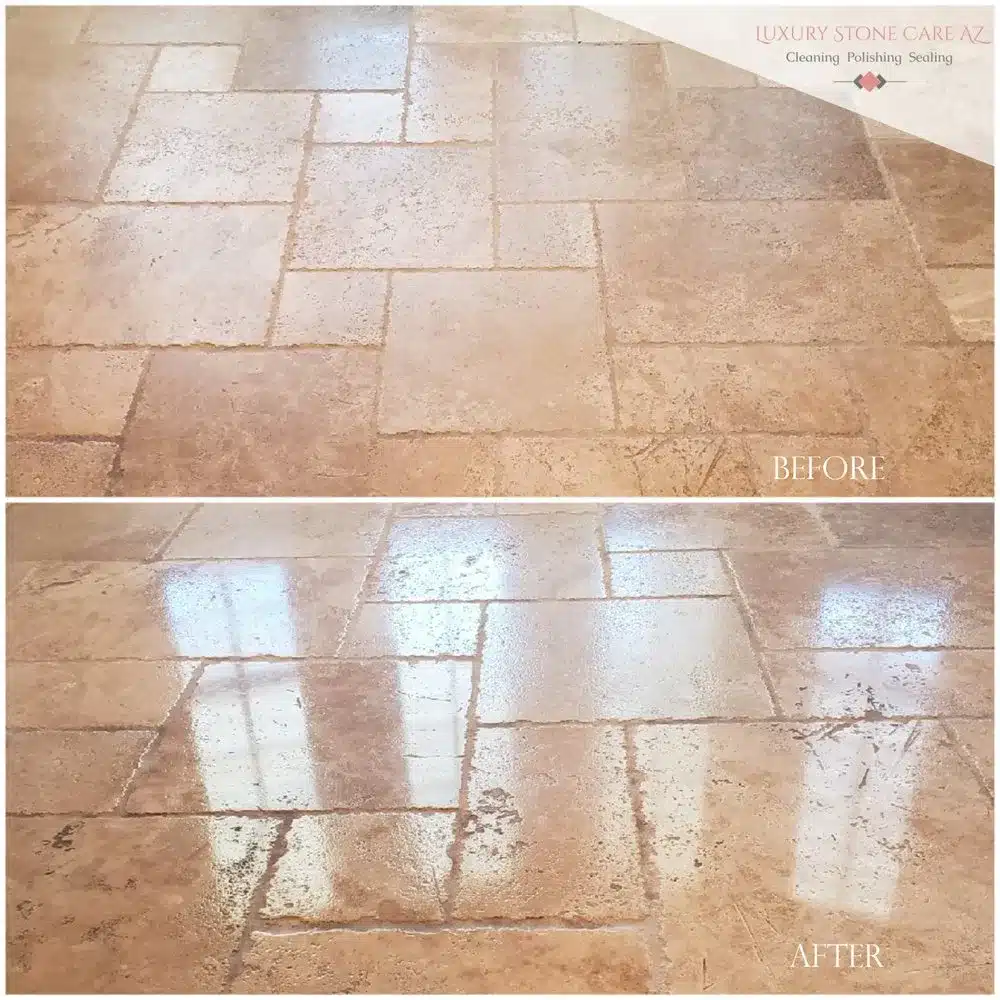
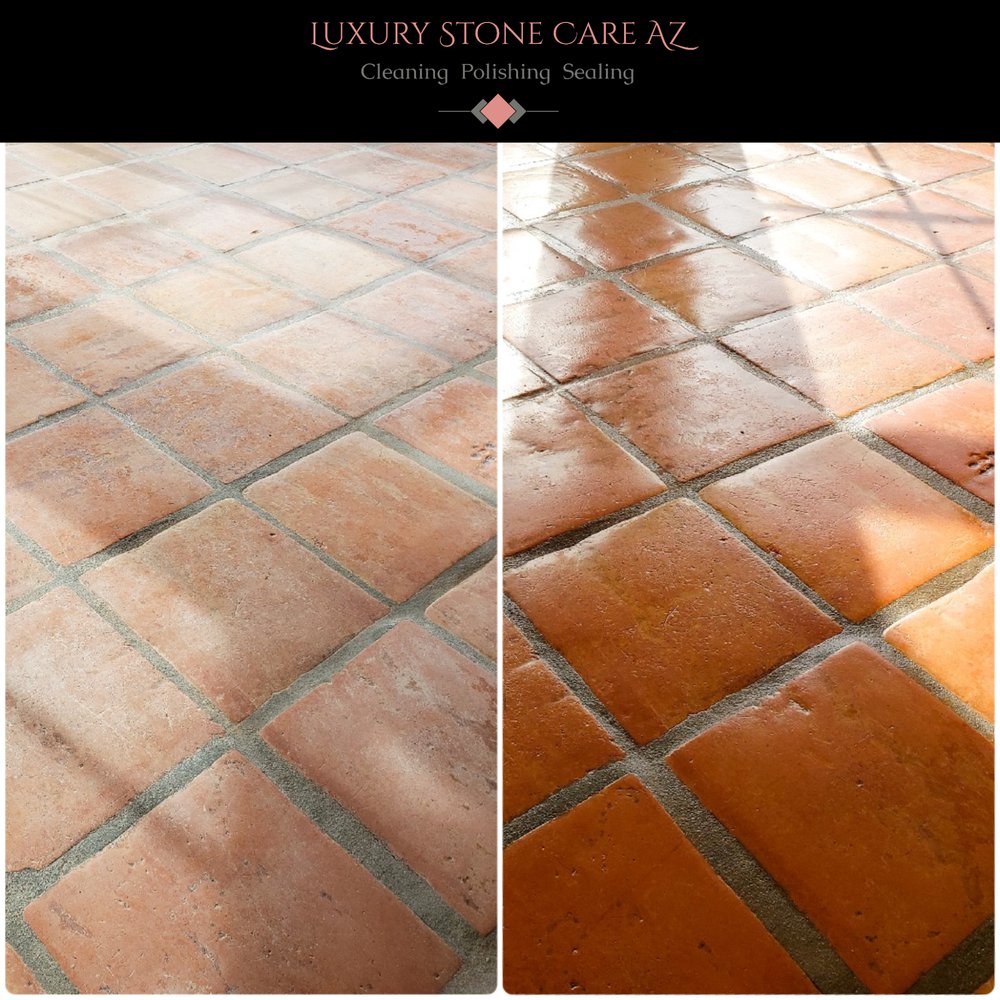
A cloudy floor is not automatically dirty. Wax, acrylic, mop residue, and failed topical sealer create film on top of the surface. Acid etching and worn finish change the stone itself. Cleaning removes compatible buildup, while honing or polishing corrects damage within the mineral surface.
Mesa dust acts like fine grit under shoes, rugs, rolling chairs, carts, and floor-cleaning equipment. It creates traffic lanes and fine scratches on polished stone when routine dust removal falls behind. Exterior flagstone, pavers, saltillo, cantera, and textured stone also receive direct sun, irrigation minerals, soil, and seasonal weather exposure.
Stone and Tile Services we provide in Mesa, AZ
Stone and tile care in Mesa includes six core treatments with different correction goals. Cleaning removes soil and compatible coatings. Grinding reduces lippage. Honing creates matte or satin finishes. Polishing restores reflection. Sealing slows absorption. Tile and grout cleaning targets ceramic tile, porcelain tile, and compatible grout systems.
Stone Cleaning and Stripping
Remove embedded soil, hard-water residue, mop film, wax, acrylic, and compatible topical sealer from travertine, marble, limestone, flagstone, slate, saltillo, pavers, and other verified stone.
A test area separates removable buildup from acid etching or finish wear. Cleaning does not restore lost reflection or remove lippage.
Stone Sealing
Apply a penetrating sealer selected for the material, porosity, traffic, moisture, and outdoor exposure of travertine, marble, limestone, flagstone, pavers, grout, and other absorbent surfaces.
Sealer improves stain resistance by slowing absorption. It does not make stone waterproof, scratch-proof, or acid-proof.
Stone Grinding and Lippage Removal
Level raised edges and reduce deep floor scratches with controlled diamond grinding when travertine, marble, limestone, or terrazzo is sound, securely bonded, and suitable for material removal.
Grinding permanently removes stone. Diego checks tile stability, cracks, grout, transitions, and movement before approving the scope.
Stone Honing
Correct acid etching, light to moderate scratches, worn traffic lanes, and uneven sheen with staged abrasives that create a consistent matte, low-sheen, or satin finish.
Honing does not remove coatings, repair loose tile, or guarantee slip resistance. Wet-area traction depends on the material, finish, contaminants, drainage, and maintenance.
Stone Polishing
Restore gloss, color depth, clarity, and consistent reflection on suitable marble, travertine, limestone, granite, onyx, and terrazzo with material-specific abrasives and polishing methods.
Polishing corrects the mineral finish. It does not remove a failed coating, level lippage, repair active cracks, or prevent future acid etching.
Tile and Grout Cleaning
Deep-clean ceramic tile, porcelain tile, cement grout, and compatible grout systems in kitchens, bathrooms, showers, entries, patios, rental units, and commercial spaces.
The crew identifies the grout and tile before selecting chemistry and agitation. Natural stone within a mixed installation receives stone-specific care.
In Mesa we handle the full range of stone care: stone cleaning and stripping, stone polishing, stone honing, stone sealing, lippage removal, tile and grout cleaning, marble etch removal, limestone restoration and travertine restoration.
Why Mesa Homeowners Trust Luxury Stone Care AZ
Mesa customers work directly with Diego Rivera, the owner and lead on each project. He identifies the material, explains what caused the visible problem, and sets the treatment before work begins. Luxury Stone Care AZ is licensed and insured, BBB Accredited with an A+ rating, and provides free on-site estimates with published stone-care pricing.

Owner-Led Material Diagnosis
Diego evaluates the stone, tile, grout, damage, previous products, desired finish, and property conditions before the crew starts. That judgment prevents cleaning an etch mark, polishing over a coating, or sealing a surface that still holds residue.

Finish-Controlled Refinishing

Published Pricing and Care Handoff
Published ranges: Basic Clean and Seal $1.50 to $1.75 per square foot, Hone, Polish and Seal $1.75 to $2.00, Strip, Polish and Seal $2.00 to $2.25. First project is 10% off, and every job starts with a free on-site estimate.
How Our Stone Care Process works in Mesa
Every Mesa project follows four stages: inspection, test-area planning, controlled correction, and dry final review. Diego determines whether the surface needs cleaning, stripping, grinding, honing, polishing, sealing, tile and grout cleaning, or a combination. The written scope explains the finish, access plan, drying, curing, and maintenance before work begins.

1. Free On-Site Assessment

2. Test Area and Written Care Plan
3. Controlled Correction and Protection
4. Dry Inspection and Maintenance Guidance
Where in Mesa Do We Provide Stone and Tile Care?
Luxury Stone Care AZ serves Mesa from west-side neighborhoods and Downtown Mesa to northeast foothill communities and southeast developments. Mesa covers about 138 square miles, so property type, water source, exterior exposure, access, and traffic vary across the city. We plan each project around the actual surface and site rather than swapping a city name into a generic process.
Downtown Mesa, West Mesa, and Dobson Ranch
Homes, condos, apartments, restaurants, offices, retail spaces, and managed properties around Downtown Mesa, west Mesa, and Dobson Ranch require clear access and reopening plans. We account for parking, shared walkways, residents, customers, furniture, drying, and the time a floor, shower, countertop, patio, or grout system must remain out of use.
Alta Mesa, Las Sendas, and the Red Mountain Area
Northeast Mesa properties often combine interior stone floors, showers, countertops, patios, pavers, pool areas, and HOA common spaces. Direct sun, foothill dust, irrigation minerals, traffic, and previous coatings affect exterior surfaces differently from protected indoor stone, so each area receives its own diagnosis and care plan.
Eastmark and Southeast Mesa
Eastmark and southeast Mesa include newer master-planned development, residential properties, community spaces, and growing commercial areas. Ceramic or porcelain tile, cement grout, stone counters, pavers, pool areas, and outdoor living surfaces still need material identification because builder-installed finishes and homeowner-applied products vary by property.
Superstition Springs and East Mesa Commercial Corridors
Retail spaces, restaurants, offices, showrooms, hospitality properties, and other customer-facing floors require scheduling around traffic and reopening. The scope identifies the work boundary, finish expectation, drying or cure time, slip concerns during service, and which areas can remain accessible while work proceeds.
Residential, HOA, and Commercial Projects
Luxury Stone Care AZ handles one-time restoration and planned stone or tile care for houses, condos, rental properties, HOAs, offices, retail spaces, restaurants, showrooms, hospitality properties, and managed facilities. The free on-site estimate accounts for property access, surface condition, desired appearance, and return-to-use needs.
Which Stone, Tile, and Grout Surfaces Do We Service in Mesa, aZ?
We service travertine, marble, limestone, granite, onyx, terrazzo, flagstone, slate, saltillo, cantera, pavers, quartz, ceramic tile, porcelain tile, and grout in Mesa. Material identification comes first because acid-sensitive stone, siliceous stone, engineered surfaces, textured materials, glazed tile, porous grout, and flexible joints require different products, abrasives, and protection plans.
Travertine Floors, Showers, and Patios
Travertine holds soil in pores, pits, fill, and grout joints. Cleaning, honing, polishing, grinding, repair, and sealing depend on the installation’s stability, open voids, old filler, moisture exposure, coating history, and selected finish. Abrasive work can expose natural holes or weak repairs below the surface.
Marble and Limestone Floors, Counters, and Vanities
Marble and limestone are calcium-based and acid-sensitive. A dull ring from wine, citrus, vinegar, or bathroom cleaner is etching rather than ordinary dirt. Cleaning removes compatible residue, while staged honing or polishing corrects damage within the mineral finish.
Granite, Onyx, and Terrazzo
Granite requires harder tooling and a different finishing method from marble, travertine, or limestone. Onyx receives case-by-case pressure, heat, vein, resin, and repair control. Terrazzo work depends on the binder, aggregate, coating, repairs, thickness, and selected sheen.
Flagstone, Slate, Cantera, Saltillo, and Pavers
Exterior and textured materials face direct sun, dust, irrigation minerals, soil, traffic, and weathered coatings. A process suitable for flat marble can erase natural cleft, alter handmade tile, or create an obvious patch, so cleaning, stripping, and sealing plans start with material identification and a test area.
Ceramic Tile, Porcelain Tile, and Grout
Glazed ceramic and porcelain tile do not automatically need sealing, while compatible cement grout often benefits from penetrating protection after cleaning. Epoxy grout, single-component grout, flexible sealant, cracked joints, loose tile, and failed caulk require separate identification and scope.
Quartz and Mixed-Material Installations
Engineered quartz contains resins and pigments and is not refinished like calcium-based natural stone. Mixed showers, kitchens, floors, patios, and pool areas can combine quartz, granite, marble, tile, glass, metal, grout, and caulk, so the crew protects each adjacent material during cleaning and correction.
What Do Mesa Property Owners Ask About Stone and Tile Care?
Mesa customers most often ask about hard-water deposits, cloudy floors, cost, sealing frequency, project timing, and restoration versus replacement. The correct answer depends on the material, damage, installation, current coating, desired finish, and property use. An on-site inspection and test area confirm which treatment the surface actually needs.
How much does stone refinishing cost in Mesa, AZ?
Luxury Stone Care AZ publishes natural-stone packages from $1.50 to $2.25 per square foot, depending on whether the surface needs cleaning and sealing, honing or polishing, or compatible coating removal before polishing. Repairs, lippage, stairs, edges, counters, access, and damage depth change the final free on-site estimate.
Does Mesa's hard water damage natural-stone showers and fountains?
Yes. We work with property Mesa water hardness ranges from 12 to 22 grains per gallon, depending on the water source, so mineral film is common around wet surfaces. The deposit may be removable, but acidic scale removers can etch marble, travertine, and limestone. Diego identifies the stone and buildup before selecting the cleaning method.managers, offices, showrooms, and retail floors across the East Valley, and we schedule commercial work around business hours and foot traffic.
What service does a cloudy or dull stone floor need?
Cloudiness from mop residue, wax, acrylic, hard-water film, or failed topical sealer needs cleaning or stripping. Dullness caused by acid etching, fine scratches, or worn finish needs honing or polishing. Raised edges need grinding, while stains inside the pores require a separate stain-treatment plan.
How often should natural stone be sealed in Mesa?
Most porous natural stone should be evaluated for resealing every 1 to 3 years, with showers, entries, commercial floors, patios, and other wet or high-traffic areas moving toward the shorter end. Sealer slows absorption and improves stain resistance. It does not prevent acid etching, scratches, leaks, or moisture moving through the installation.
How long will my Mesa stone or tile project take?
A small stone area generally takes part of a day to one workday, and most standard residential tile and grout projects take about 2 to 8 hours. Whole-home refinishing, heavy coating removal, lippage correction, repairs, exterior work, and commercial areas take one to several days. The estimate states the sequence and return-to-use timing.
Is refinishing worth it compared with replacing stone or tile?
Refinishing is worth it when the stone and installation are sound and the damage sits within the surface. It preserves the existing material and avoids demolition, disposal, replacement material, and installation. Replacement is the better choice when tile is loose, the substrate is failing, movement remains active, or breakage is widespread.