Owner-Led Stone Cleaning and Stripping
Our Services
Stone sealing
Stone Cleaning
Stone Grinding
Stone Polishing
Stone honing
Marble Etch Removal
Limestone Restoration
Tile and grout
Get in touch
8310 E Palm Ln Scottsdale, AZ 85257
(480) 233-4356
Mon – Sat 8.00 – 17.00
Sunday 9.00 – 17.00
Stone Cleaning & Stripping in Scottsdale AZ
Owner-operated by Diego Rivera. Licensed and insured. BBB Accredited Business with an A+ rating. Free on-site stone cleaning estimates for residential and commercial properties.

Even the most beautiful stone surfaces lose their luster over time. Dirt, buildup, old sealers, and daily wear can leave your floors, countertops, and showers looking dull or discolored.
Luxury Stone Care AZ provides stone cleaning and stripping in Scottsdale, AZ, the first step in our stone refinishing process, for travertine, marble, limestone, granite, flagstone, slate, terrazzo, cantera, saltillo, pavers, and other stone surfaces. Owner Diego Rivera identifies the material and buildup before removing embedded soil, mop residue, wax, acrylic, topical sealer, and coating haze.
Call today at (480) 233-4356 or request a free in-home estimate.
Why Professional Stone Cleaning Matters
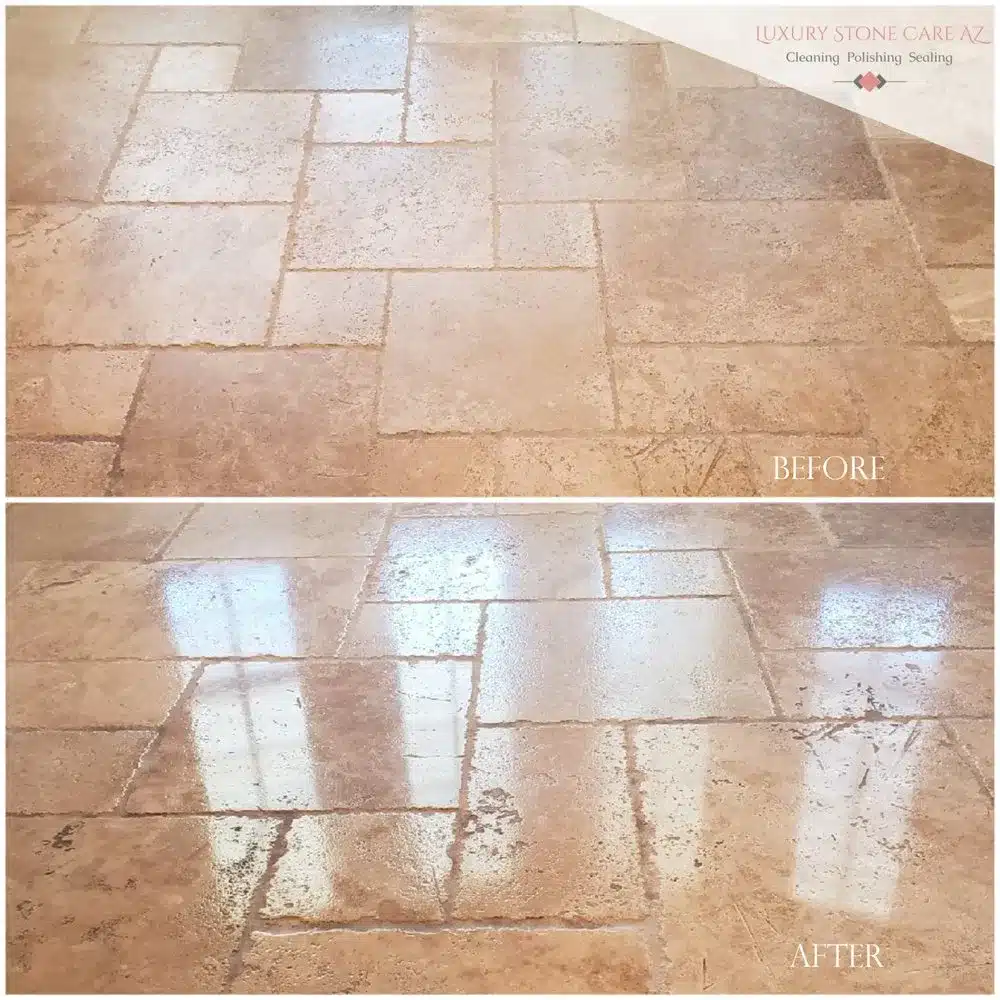
Professional stone cleaning removes embedded soil, cleaner residue, hard water deposits, and construction haze that routine mopping leaves behind. Stripping removes old wax, acrylic, and topical sealer when those coatings cause cloudiness or discoloration. The correct process depends on whether the visible problem is soil, mineral buildup, coating failure, staining, or acid etching.
Arizona dust works into the pores, pits, grout joints, and textured areas of travertine, limestone, flagstone, slate, saltillo, and pavers. Hard water leaves mineral deposits in showers, bathrooms, fountains, and around wet areas. Repeated use of soap, wax, acrylic finish, or the wrong cleaner adds another layer that traps soil instead of removing it.
Not every cloudy floor needs stripping. A white film may be cleaner residue, hard water, grout haze, or a failed topical coating. A dull ring on marble, travertine, or limestone may be acid etching, which cleaning does not remove. Diego tests the surface before choosing chemistry because stripping an intact finish or using acid on calcium-based stone creates avoidable damage and cost.
Wax, acrylic, and topical sealer form films on the surface. Penetrating sealer behaves differently and is not treated like a removable floor finish. Identifying the product already on the stone is one of the most important judgment calls in the job.
What Professional Cleaning and Stripping Removes
- A Deeper Clean for Natural Stone: Removes tracked dust, cooking residue, soap film, mop residue, and embedded grime from travertine, marble, limestone, granite, flagstone, slate, terrazzo, cantera, saltillo, and pavers.
- Clear Away Cloudy Buildup: Strips compatible wax, acrylic, and failed topical sealer after the coating is identified and a test area confirms the removal method.
- Calcium-Stone Safeguards: Protects acid-sensitive marble, travertine, and limestone from vinegar, citrus cleaners, acidic bathroom products, and other chemistry that can leave permanent etch marks.
- A Clean Surface Without Film: Removes spent cleaning solution, dissolved soil, and stripping residue so the surface is ready for normal use or a separately approved refinishing or stone sealing step.
What Cleaning and Stripping Will Not Fix
Cleaning and stripping remove contaminants and compatible coatings. They do not level lippage, erase deep scratches, repair cracks, remove acid etching, or recreate a worn matte, satin, or glossy finish. Those conditions require grinding, honing, polishing, repair, or another stone-specific correction after the surface is diagnosed.
How Our Stone Cleaning & Stripping Process works
Our stone cleaning and stripping process starts with identification and a test area, then moves through soil removal, coating removal when required, rinsing, residue control, drying, and final inspection. Diego Rivera leads the assessment because travertine, marble, limestone, granite, slate, flagstone, saltillo, and pavers do not tolerate the same chemistry or agitation.

1. Material Identification and Free Estimate
We identify the stone, engineered surface, grout, paver, or specialty tile, then inspect porosity, finish, traffic, moisture, stains, hard water deposits, repairs, previous cleaners, and old coatings. A small test area helps separate removable soil or film from acid etching, finish wear, discoloration, or physical damage.

2. Controlled Soil and Residue Removal
We protect adjacent surfaces, remove loose grit, and apply cleaning chemistry selected for the material and buildup. The crew gives the solution the required contact time, uses controlled agitation, and removes the released soil instead of spreading it across the floor. Acid-sensitive stone never receives a generic acid wash.

3. Wax, Acrylic, and Topical Sealer Stripping
When inspection confirms a removable coating, we select the stripping method for that coating and stone. Multiple applications may be required where years of wax, acrylic, or topical sealer have built up. We do not promise that every product labeled “sealer” can be stripped, because penetrating sealers sit within the pores rather than forming the same surface film.

4. Rinse, Residue Control, Drying, and Final Review
We remove the spent solution and residue, rinse the surface, and neutralize where the chemistry requires it. After the stone dries enough for a fair inspection, Diego reviews the color, clarity, remaining marks, joints, and coating edges under the property’s normal lighting. You receive maintenance guidance and a clear explanation of any separate correction the stone still needs.
A clean test patch that still shows a dull ring, pale spot, or loss of reflection usually points to etching or finish wear rather than dirt. That field distinction prevents repeated cleaning from wasting time or making acid-sensitive stone worse.
Where We Provide Stone Cleaning in the East & West Valley
Luxury Stone Care AZ provides residential and commercial stone cleaning and stripping from Scottsdale across the East and West Valley. Common local projects include dusty travertine floors, hard water buildup in natural-stone showers and fountains, failed coatings on patios and entries, and tracked soil in offices, showrooms, hotels, and retail spaces.
Arizona conditions change the cleaning plan. Fine dust acts like grit under shoes and furniture. Hard water leaves mineral deposits that are often mistaken for soap film. Intense sun and outdoor exposure weather stone, joints, and topical coatings differently from protected indoor floors, so Diego evaluates the location as carefully as the material.
We serve Scottsdale, Paradise Valley, Fountain Hills, Phoenix, Tempe, Mesa, Chandler, Gilbert, Peoria, and other listed East & West Valley communities.
Stone Surfaces We Clean & Strip
We clean travertine, marble, limestone, granite, onyx, terrazzo, flagstone, slate, cantera, saltillo, pavers, and other verified stone surfaces. We remove compatible wax, acrylic, and topical sealer systems after testing. Ceramic, porcelain, and grout cleaning belong under our tile and grout cleaning and grout restoration service unless natural stone is part of the same project.
Travertine and Limestone
Travertine and limestone are porous, calcium-based, and acid-sensitive. Dust, mop residue, soap film, and hard water settle into pits, voids, grout joints, and textured areas. We identify filled areas, repairs, coatings, and etching before cleaning because an acidic descaler can permanently mark the stone. Floors that still look dull once the soil is gone are candidates for travertine cleaning and restoration.
Marble and Onyx
Marble and onyx floors, counters, vanities, and showers show residue and finish damage clearly under direct light. Cloudiness caused by a coating can be stripped, but cloudiness caused by etching or worn polish requires a separate honing or polishing plan. Cleaning alone does not restore lost reflection.
Granite and Terrazzo
Granite is denser than many calcium-based stones, but cleaner residue, cooking oil, tracked soil, and old coatings still collect on floors and counters. Terrazzo requires identification of the matrix, finish, and coating before chemistry is selected. We do not assume every terrazzo floor or polished surface receives the same process.
Flagstone, Slate, and Cantera
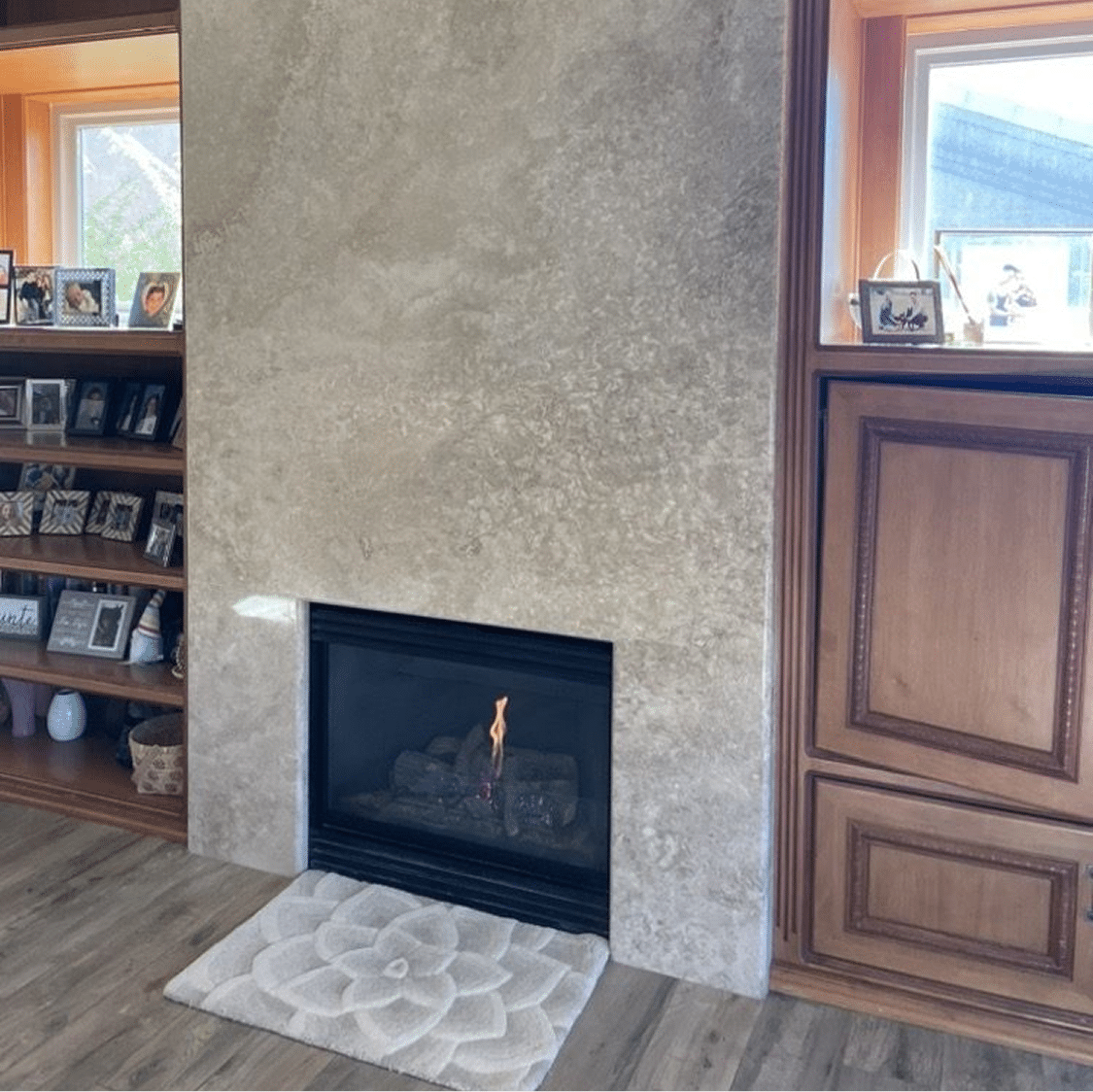
Patios, walkways, fireplaces, fountains, and architectural stone collect Arizona dust, irrigation minerals, outdoor soil, and weathered coating residue. We inspect joints, surface texture, drainage, loose material, and previous treatment before choosing agitation or stripping methods.
Saltillo and Pavers
Saltillo tile and concrete pavers vary widely in absorption and previous coating history. Older floors and patios may hold several layers of wax, acrylic, or topical sealer, so a test area is essential before full removal. Exterior return-to-use instructions account for heat, sun, irrigation, foot traffic, and vehicle traffic.
Quartz and Other Engineered Surfaces
Quartz is an engineered surface with resins and pigments, not a calcium-based natural stone. We evaluate it separately and avoid treating it like marble, travertine, granite, or terrazzo. The inspection confirms whether the problem is removable residue, staining, heat damage, finish damage, or another condition outside a cleaning scope.
Stone Cleaning & Stripping Questions Property Owners Ask
Stone cleaning decisions depend on the material, visible problem, previous products, and desired result. The key distinction is whether the surface holds removable soil or film, a failed coating, a stain within the pores, or physical finish damage. Cleaning and stripping solve the first two conditions, while the others require a different treatment plan.
What’s the difference between stone cleaning and stone stripping?
Stone cleaning removes embedded soil, mop residue, soap film, hard water deposits, and other surface contamination. Stone stripping removes compatible wax, acrylic, or topical sealer that forms a film and causes haze, discoloration, or uneven buildup. Diego identifies what is present before recommending either process.
How often should stone be professionally cleaned?
Most homeowners should plan a professional deep cleaning every 1 to 2 years. Entryways, kitchens, showers, patios, and commercial floors with heavy traffic, moisture, dust, or product buildup need assessment sooner. Daily dust removal and a stone-safe cleaner reduce abrasive grit between professional services.
Can you remove haze or cloudiness from natural stone?
Yes, when the haze comes from cleaner residue, hard water deposits, wax, acrylic, or a failed topical coating. Cloudiness caused by acid etching or a worn finish does not wash away and requires stone honing or stone polishing. A test area establishes which condition is present before the full scope is approved.
Can I clean or strip natural stone myself?
Routine dust mopping and cleaning with a product approved for the identified surface is appropriate maintenance. Stripping is different because the wrong chemistry, contact time, agitation, or rinse procedure can etch calcium-based stone, discolor a coating, leave sticky residue, or spread dissolved finish into joints. Do not use vinegar, citrus cleaner, or acidic bathroom descaler on marble, travertine, or limestone.
Will professional cleaning remove stains, etching, and scratches?
Cleaning removes soil and residue on or near the surface, but it does not correct every dark spot or dull mark. A stain has entered the pores, an etch is chemical damage to the finish, and a scratch is physical damage. Diego identifies the condition and explains whether separate stain treatment, honing, polishing, grinding, or repair is required.
Is professional stone cleaning and stripping worth it?
It is worth it when embedded soil, residue, hard water deposits, or a removable coating is hiding the stone and routine maintenance no longer changes the appearance. It protects the existing material from repeated use of the wrong products and establishes a clean surface for accurate diagnosis. Refinishing is the better investment when the remaining problem is etching, scratches, lippage, or finish wear.