
Level Raised Stone Tile Edges
Our Services
Stone sealing
Stone Cleaning
Stone Grinding
Stone Polishing
Stone honing
Marble Etch Removal
Limestone Restoration
Tile and grout
Get in touch
8310 E Palm Ln Scottsdale, AZ 85257
(480) 233-4356
Mon – Sat 8.00 – 17.00
Sunday 9.00 – 17.00
Stone Grinding & Lippage Removal in Scottsdale AZ
Owner-operated by Diego Rivera. Licensed and insured. BBB Accredited Business with an A+ rating. Free on-site stone grinding estimates for residential and commercial stone floors.

Uneven tiles, ridges, and scratches don’t just look bad; they can also create safety hazards and accelerate wear on your stone floors.
Luxury Stone Care AZ provides stone grinding and lippage removal in Scottsdale, AZ for uneven travertine, marble, limestone, and terrazzo floors. Owner Diego Rivera inspects raised tile edges, deep scratches, grout joints, cracks, transitions, and signs of movement before deciding whether the floor needs local correction or full-field grinding.
Call today at (480) 233-4356 or request a free in-home estimate.
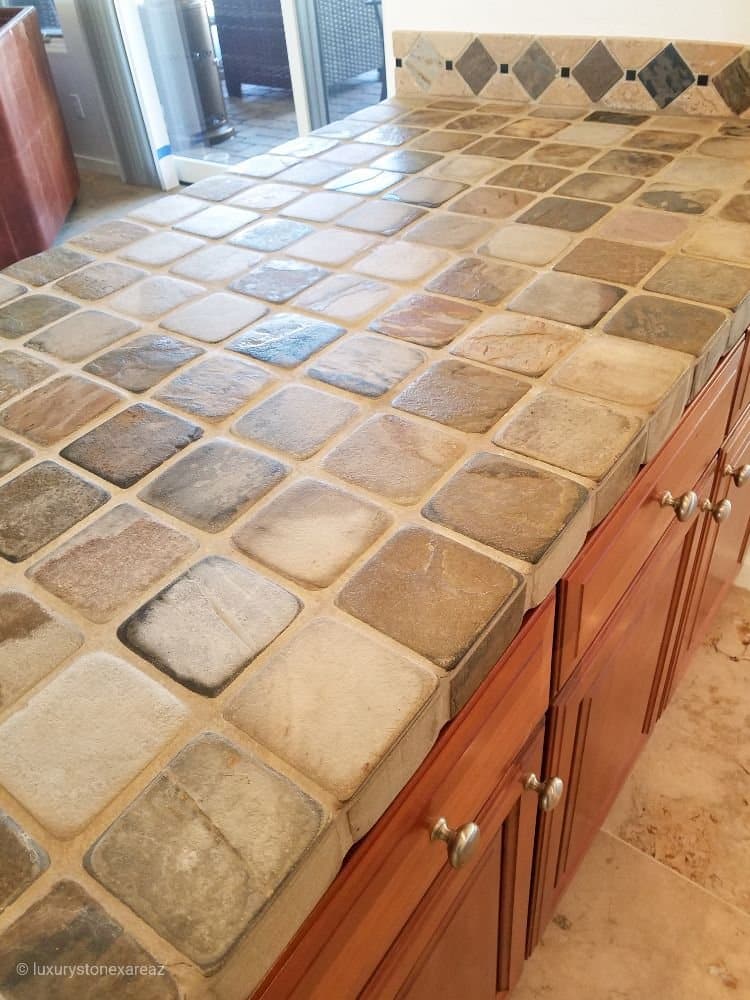
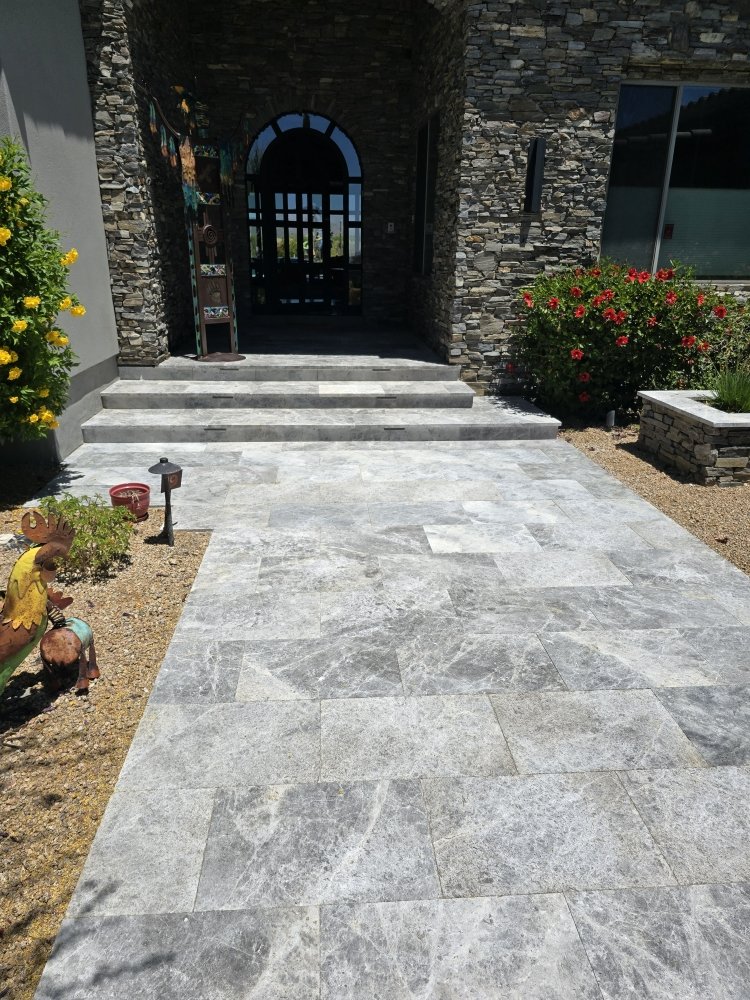
What does Stone Grinding in Scottsdale fix?
Stone grinding corrects raised tile edges, widespread lippage, deep scratches, and surface variation by removing a controlled amount of stone from the high areas. It improves floor flatness and reduces trip and chipping risks, but it does not repair loose tile, active substrate movement, hollow bonding, or structural cracks.
Lippage is the vertical difference between the edge of one tile and the adjacent tile. Raised edges catch shoes, rolling carts, furniture, cleaning equipment, and floor pads. They also concentrate impact on the exposed edge, which increases the chance of chipping and makes routine maintenance less consistent. Natural-stone industry references treat flatness and allowable lippage as defined installation conditions rather than appearance alone.
Grinding is not a cleaning step and it is not a quick cosmetic pass. Diamond abrasives cut the high points of the stone, leaving a controlled scratch pattern that must be refined across the affected area. Diego determines how much material can be removed without creating a low spot, exposing unstable fill, or producing a visible blend line. Professional grinding systems use staged abrasives to flatten the floor and then remove the scratch pattern from the initial cut.
A raised edge caused by poor installation can often be corrected when the tile is sound and securely bonded. A raised edge caused by ongoing movement, a loose tile, substrate failure, or a structural crack requires repair or replacement before surface grinding makes sense. Grinding the symptom without addressing movement wastes money and can leave the problem active.
What Stone Grinding Corrects
- Flatter Walking Surfaces: Identifies raised edges across the floor before cutting begins, so the correction addresses the actual height variation rather than one visible tile in isolation.
- Raised Edges Brought Down: Removes controlled amounts of travertine, marble, limestone, or terrazzo from high areas, then refines the grinding pattern across the affected field.
- Correct Scratches Below the Finish: Reduces scratches too deep for routine honing when the stone thickness, bond, grout, and surrounding floor support the required amount of material removal.
- A Floor That Meets Cleanly: Accounts for doorways, baseboards, cabinets, stairs, floor drains, adjacent flooring, grout joints, and perimeter edges before the floor height is changed.
What Stone Grinding Does Not Fix
Grinding does not secure loose tile, stop active movement, rebuild a failing substrate, correct hollow bonding, close structural cracks, or replace missing stone. It also does not create the final matte, satin, or glossy appearance by itself. The floor normally needs staged refinement after the leveling cut.
Why Improper Grinding Costs More
Grinding permanently removes stone. An aggressive or uneven cut can dish the floor, chip tile edges, expose travertine voids, damage grout, change the texture, or leave a halo around a spot repair. The correct judgment call is often the least aggressive cut that corrects the problem and still allows a uniform final finish.
How Our Stone Grinding Process works
Our process begins with stone identification and floor mapping, then moves through protection, controlled diamond grinding, edge work, staged refinement, and final inspection. Diego Rivera decides whether the damage calls for local correction or full-field grinding because spot work can leave a visible low area or finish mismatch on a continuous stone floor.

1. Inspection & Free Estimate
We identify the material and inspect the entire affected area, not only the edge that first caught your attention. Diego checks lippage severity, tile thickness where it can be confirmed, bond and movement clues, cracks, grout condition, previous repairs, transitions, cabinets, baseboards, drains, and the finish you want after leveling.

2. Test Area and Work-Site Protection
We protect adjacent flooring, walls, cabinets, doors, fixtures, and transitions, then confirm the abrasive sequence on a controlled test area. The test shows how the stone cuts, whether fill or voids open, how the grout responds, and whether a local blend or broader grinding field will produce the better result.

3. Controlled Grinding and Edge Work
We use diamond abrasives to reduce the high tile edges and bring the affected floor into a flatter plane. The cut progresses in controlled stages rather than forcing the final depth in one pass. Perimeter edges, doorways, cabinets, columns, and other machine-limited areas receive separate attention so the main field does not stop short of the visible boundary.

4. Staged Refinement and Final Review
The grinding cut leaves an abrasive pattern, so the floor is refined through the required follow-up stages before it receives the agreed appearance. A matte or satin endpoint belongs to the honing plan, while a reflective endpoint belongs to the polishing plan. Sealer is applied only when the stone, finish, exposure, and approved scope require it.
Diego reviews the floor under the property’s normal lighting and checks the corrected edges, field flatness, perimeter blend, grout, repairs, transitions, and remaining damage. You receive maintenance guidance and clear return-to-use instructions before furniture, foot traffic, water, or cleaning equipment returns.
Serving Scottsdale & the East & West Valley
Luxury Stone Care AZ provides residential and commercial stone grinding from Scottsdale across the East and West Valley. Common projects include raised travertine edges in entries and living areas, uneven marble in hallways and lobbies, deep floor scratches, and transitions that catch shoes, carts, furniture, or cleaning equipment.
Arizona dust acts like grit under foot traffic and floor equipment, which makes wear around high edges and deep scratches more visible. Strong daylight also exposes uneven reflection after a poor spot repair. Diego plans the grinding field and final refinement around the floor, traffic pattern, lighting, and adjacent materials rather than treating every raised tile as an isolated defect.
We serve Scottsdale, Paradise Valley, Fountain Hills, Phoenix, Tempe, Mesa, Chandler, Gilbert, Peoria, and other listed Phoenix Valley communities.
Which Stone Surfaces are suitable for grinding?
Grinding is most predictable on flat, dimensioned natural stone floors such as travertine, marble, limestone, and terrazzo. Granite and onyx require individual evaluation. Cleft slate, flagstone, saltillo, cantera, pavers, ceramic tile, porcelain tile, and engineered quartz are not automatic candidates because grinding can permanently alter their texture or manufactured surface.
Professional diamond systems are sold specifically for flattening and lippage removal on marble, limestone, granite, and terrazzo, but material name alone does not establish that an installed floor is suitable. The installation, thickness, bond, grout, repairs, texture, and intended finish still control the decision.
Travertine Floors
Travertine is a common grinding candidate when the tile is thick enough, securely bonded, and suitable for stone refinishing. The abrasive cut can expose natural holes, weak fill, or previous repairs below the surface, so the estimate must account for refill work and the desired final appearance.
Marble Floors
Marble lippage and deep scratches can be corrected when the installation is sound and the required cut is reasonable. Veins, soft areas, old repairs, grout joints, and edge chipping affect the abrasive sequence. Grinding is followed by refinement to the chosen honed or polished finish, then stone sealing where the material calls for it.
Limestone Floors
Limestone varies in density, fossil content, porosity, and softness. Diego tests how the floor cuts before committing to the full field. Deep scratches may be removable, but loose stone, spalling, open cracks, or active movement require a different plan.
Terrazzo Floors
Terrazzo grinding depends on the binder, aggregate, repairs, thickness, previous coating, and desired finish. The process must keep the aggregate exposure and repair areas visually consistent. Cement-based and resin-based terrazzo do not receive an identical sequence.
Granite and Onyx
Granite is harder and usually requires more labor and tooling than marble, travertine, or limestone. Onyx can be fragile, heavily veined, and visually sensitive. Both receive a case-by-case assessment before grinding is recommended.
Textured Stone and Manufactured Tile
Cleft slate, flagstone, saltillo, cantera, pavers, glazed ceramic, porcelain, and engineered quartz are not treated like flat dimension stone. Grinding can erase a natural cleft, remove a glaze, expose a different body color, change a manufactured texture, or create an obvious patch. Cleaning, repair, replacement, or another surface-specific treatment may be the correct recommendation.